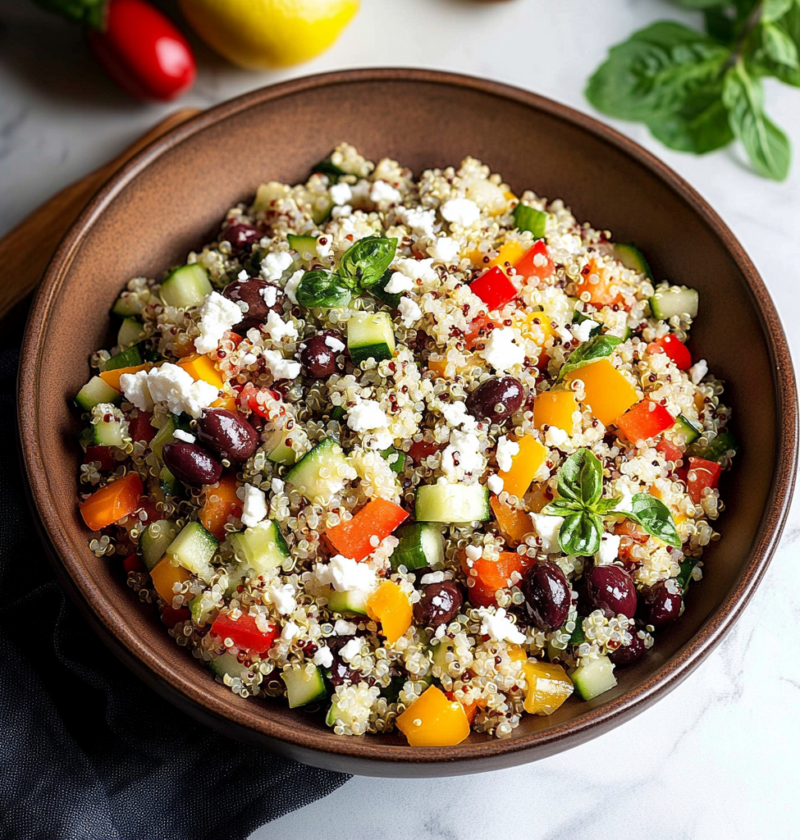
This nutritious and vibrant quinoa salad combines fluffy grains with crunchy vegetables and a zesty lemon dressing to create a satisfying main dish or side option for lunch, dinner, or potlucks. The balanced combination of textures and fresh flavors provides a healthy and light meal that is perfect for busy weeknights or summer gatherings without requiring extensive cooking time. The recipe emphasizes whole ingredients and avoids heavy sauces to maintain freshness and nutritional value throughout the serving experience.
| Detail | Information |
|---|---|
| Prep Time | 25 minutes |
| Cook Time | 15 minutes |
| Total Time | 40 minutes |
| Servings | 6 |
| Difficulty | Easy |
| Cuisine | Mediterranean |
| Category | Side Dish |
| Method | Boiling and tossing |
Why This Recipe Works
This recipe succeeds because the structure relies on a simple yet flavorful dressing that coats every grain of quinoa evenly before the fresh vegetables are added to maintain their crisp texture. The base of quinoa provides a complete protein source and neutral backbone that absorbs the aromatic herbs and citrus without becoming soggy or losing its bite. I have tested this method many times to ensure the grain is fluffy rather than mushy, which is the most crucial factor for a satisfying salad texture. The use of warm quinoa helps the dressing adhere better to the surface of the seeds, creating a cohesive flavor profile that penetrates throughout the dish.
The addition of high-quality ingredients like extra-virgin olive oil and fresh lemon juice ensures the final dish is vibrant and rich without requiring excessive salt or preservatives. Fresh herbs and briny olives provide a complex layer of flavor that keeps the palate interested with every bite, preventing the dish from feeling bland or repetitive. This method also allows for flexibility in ingredient choices while maintaining the core integrity of the Greek-inspired flavor profile that defines this Mediterranean classic preparation.
Furthermore, the recipe is designed to be versatile enough to serve as a standalone lunch for individuals or a healthy side dish paired with grilled proteins for a family dinner. The nutritional density is high, offering significant fiber and essential vitamins while keeping the calorie count reasonable for daily consumption. By focusing on quality preparation techniques rather than complex culinary skills, this salad remains accessible to home cooks of all experience levels while delivering restaurant-quality results.
Chef Tips for Perfect Results
Successful preparation of this salad relies heavily on the proper handling of the grain and the balance of the dressing components during the mixing phase. You will want to pay close attention to the rinsing stage to remove any natural bitterness from the quinoa before it enters the water.
- Thorough rinsing: Rinse the quinoa under cold running water for at least one minute to remove saponins and prevent a bitter aftertaste in the final grain.
- Proper drainage: Ensure the cooked quinoa is well-drained in a fine-mesh sieve to remove excess starch and water before tossing with the dressing.
- Dressing temperature: Whisk the oil and lemon mixture before adding it to the warm quinoa so the emulsion is stable and the flavors are integrated immediately.
- Cooling period: Let the dressed quinoa cool completely in the refrigerator before adding the fresh cucumber and vegetables to prevent wilting and loss of crunch.
- Seasoning balance: Taste the quinoa after adding the dressing to determine if additional salt or pepper is needed before introducing the salty feta cheese.
- Vegetable prep: Dice the bell peppers and cucumber into uniform sizes so that every spoonful contains a consistent ratio of textural contrast and vegetable flavor.
- Feta handling: Crumble the feta by hand rather than using pre-crumbled blocks to ensure better texture and distribution of the cheese throughout the bowl.
- Scallion freshness: Use fresh green parts of the scallions for a sharper onion bite that complements the milder sweetness of the quinoa and bell peppers.
Common Mistakes to Avoid
Making mistakes during this preparation can lead to a salad that is either too wet, too dry, or lacking the intended depth of flavor profile that characterizes this dish. The following table outlines the most frequent errors and how to correct them efficiently.
| Mistake | Why It Happens | How to Fix It |
|---|---|---|
| Overcooked quinoa | Cooking the grain for too long or too high heat creates a mushy texture. | Follow the package instructions exactly and fluff with a fork immediately after cooking. |
| Soggy vegetables | Adding fresh veggies to hot grain destroys their crisp structure immediately. | Allow the quinoa to reach room temperature before stirring in the cucumber and peppers. |
| Bland dressing | Insufficient lemon juice or salt results in a flavorless oil and herb mixture. | Adjust the seasoning by adding more zest or juice and taste before serving. |
| Dry salad | Not enough olive oil adheres to the grain, making it chewy and unappealing. | Increase the oil by one tablespoon and toss thoroughly to coat the grains evenly. |
| Bitter quinoa | Failing to rinse removes the bitter coating called saponin found naturally on the seed. | Rinse under cold water in a mesh strainer until the water runs clear and foaming stops. |
Variations and Substitutions
Modifying this recipe is easy if you have specific dietary needs or limited ingredients in your pantry at the moment. You can swap out components to accommodate allergies while keeping the overall flavor profile intact and satisfying for the palate.
| Ingredient or Element | Substitution or Variation | Impact on Flavor or Texture |
|---|---|---|
| Feta cheese | Use vegan feta or omit for a fully plant-based version | Removes saltiness and creaminess; salt needs adjustment elsewhere. |
| Black olives | Substitute with green olives or capers | Changes the brine profile; green olives are fruitier and capers are sharper. |
| Bell pepper | Use roasted red peppers from a jar | Softens texture and adds a smoky sweet flavor profile. |
| Extra-virgin olive oil | Use avocado oil or grapeseed oil | Alters the fruitiness of the oil; avocado oil is milder and higher in healthy fats. |
| Scallions | Dice red onion or use chives | Red onion adds a stronger bite; chives provide a milder onion flavor. |
| Quinoa | Substitute with cooked couscous or farro | Couscous is lighter and farro is chewier and nuttier in taste. |
| Cucumber | Use cherry tomatoes cut in half | Increases juiciness and acidity; tomatoes hold less crunch overall. |
| Lemon juice | Use lime juice or rice vinegar | Lime is more tropical and acidic; vinegar adds a sharper tang. |
Serving Suggestions and Pairings
This quinoa salad is versatile enough to stand alone as a complete meal or to be served alongside grilled meats and roasted vegetables for a balanced feast. It pairs exceptionally well with the following items to enhance the dining experience and nutritional profile for any gathering.
- Grilled chicken breast or thighs marinated in lemon and oregano.
- Baked salmon fillet seasoned with a drizzle of olive oil and dill.
- Whole wheat pita bread toasted until crispy on the outside.
- Roasted sweet potato wedges seasoned with sea salt and paprika.
- Creamy tzatziki sauce made with Greek yogurt and fresh cucumber.
- Warm hummus served as a dipping option for the salad components.
- Fresh fruit salad with melon or berries for a sweet finish.
- Iced tea or lemonade served with mint leaves for hydration.
- Greek yogurt parfaits with honey and walnuts for dessert.
- Roasted red peppers served whole as a light side dish.
- Crusty baguette sliced and served warm with olive oil dip.
- Lamb chops seasoned with rosemary for a hearty dinner option.
For a complete summer dinner, serve this quinoa salad alongside grilled Mediterranean chicken and roasted vegetables to create a cohesive and healthy meal plan that feels substantial yet nutritious. The combination of light grains and fresh produce pairs perfectly with the protein source without overwhelming the palate or causing indigestion after eating.
Make Ahead Options
Yes, you can prepare this quinoa salad one full day in advance to save time during the busy week or for potlucks. The grain base and dressing can be cooked and stored separately to maintain the best texture and quality before the fresh vegetables are added.
I recommend cooking the quinoa and whisking the dressing the night before, then combining them in an airtight container in the refrigerator to infuse the flavors overnight. This process allows the quinoa to absorb the lemon oil mixture fully without becoming dry or bitter over the course of the day. Do not add the fresh vegetables or cheese until just before serving to ensure maximum crunch and visual appeal for the final dish presentation.
For optimal freshness, store the salad in a high-quality container with a tight-sealing lid to prevent it from absorbing any odors from other foods in the refrigerator. When ready to serve, simply stir the salad and adjust the seasoning if necessary, as cold storage can mute the perception of salt and acidity in the mixture.
Storage and Reheating
You should store the quinoa salad in an airtight container in the refrigerator to ensure the ingredients remain fresh and safe to eat for several days. Because the dish does not contain meat or dairy products that spoil quickly at room temperature, refrigeration is the primary method for maintaining quality.
| Method | Duration | Instructions |
|---|---|---|
| Room Temperature | 1 hour maximum | Leave out only for serving time before returning to the fridge. |
| Refrigerator | 4 days | Store in an airtight container to maintain texture and moisture levels. |
| Freezer | 1 month | Not recommended due to texture loss in fresh vegetables and feta. |
| Reheating | Do not reheat | Serve chilled or at room temperature; do not apply heat. |
| Make Ahead | 24 hours | Combine quinoa and dressing 24 hours prior to adding vegetables. |
When storing leftovers, ensure the salad is covered tightly with a lid or plastic wrap to prevent it from drying out or absorbing any moisture from other containers in the storage space. Do not keep the salad at room temperature for more than two hours to prevent bacterial growth as per food safety guidelines regarding perishable foods.
Nutritional Information
Approximate values are based on one serving and may vary depending on exact ingredients and portion size.
| Nutrient | Amount per Serving |
|---|---|
| Calories | 245 |
| Protein | 7 grams |
| Fat | 12 grams |
| Saturated Fat | 4 grams |
| Carbohydrates | 28 grams |
| Fiber | 4 grams |
| Sugar | 3 grams |
| Sodium | 320 milligrams |
The nutritional breakdown reflects the high content of healthy fats, which provides sustained energy throughout the afternoon or evening hours without a sugar crash. It is a nutrient-dense dish suitable for those pursuing a vegetarian or plant-forward diet while still seeking adequate protein intake for muscle maintenance and repair.
Frequently Asked Questions
Can I substitute the feta cheese?
Yes, you can substitute the feta cheese with nutritional yeast for a vegan option or keep the cheese if you follow a vegetarian diet. Other cheese substitutions like goat cheese or mozzarella will alter the salt level and texture significantly compared to the original recipe.
How do I know when the quinoa is done cooking?
You will know the quinoa is done when the grains have become translucent and a small white spiral ring appears around the edge of each seed. This is the visual cue that the water has been fully absorbed and the center is cooked properly.
What do I do if the salad tastes too bitter?
If the salad tastes too bitter, the quinoa likely was not rinsed adequately before cooking and saponins remain on the surface. You can add more lemon juice and olive oil to balance the acidity and mask any lingering bitterness effectively.
Can I make this recipe ahead of time?
Yes, you can make parts of this recipe ahead of time to improve the flavor profile and ease of preparation during your busy week. The quinoa base can be prepared up to two days in advance while the vegetables should be prepped closer to serving.
What is the best way to serve this side dish?
The best way to serve this side dish is cold or at room temperature to preserve the freshness and crunch of the raw vegetables. It makes an excellent accompaniment to any grilled protein or can be a light lunch option on its own.
How should I store leftovers safely?
You should store leftovers in a sealed glass or plastic container in the refrigerator for up to four days to ensure freshness. Do not leave the salad out at room temperature for extended periods to maintain food safety standards.
Conclusion
This quinoa salad recipe delivers a perfect balance of textures and flavors that are both refreshing and filling for any meal of the day. The preparation is simple, the ingredients are wholesome, and the result is a healthy addition to your meal rotation that never feels boring or lacking nutrition. I encourage you to make it tonight to experience the vibrant taste of fresh citrus, herbs, and crunchy vegetables in every single bite.
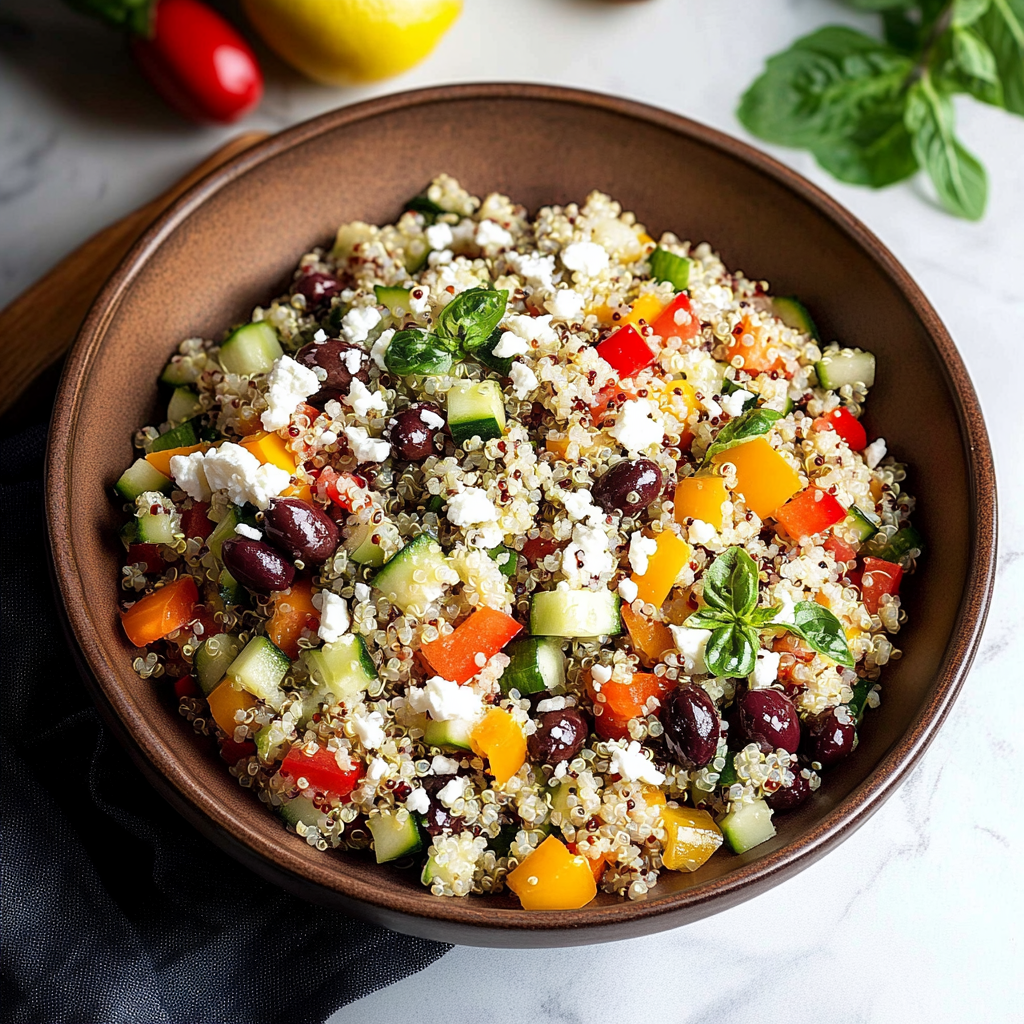
Easy Quinoa Salad with Fresh Mediterranean Flavors
Ingredients
Method
- Rinse quinoa in cold water until it runs clear and set aside.
- Cook quinoa in 2 cups water or vegetable broth in a covered pot over medium heat until liquid is absorbed and quinoa is fluffy (12-15 minutes). Let cool slightly.
- Heat olive oil in a large bowl, add cooked quinoa, then mix in lemon juice, minced garlic, and herbs.
- Combine with cucumber, cherry tomatoes, soaked red onion, olives, and feta until evenly tossed.
- Season with salt and pepper if desired, chill briefly for best flavor, then serve.
Nutrition
Notes
Chill the salad before serving to let flavors meld.
Replace feta with vegan cheese for a vegan option.
Add chickpeas or grilled zucchini for extra protein/textures.