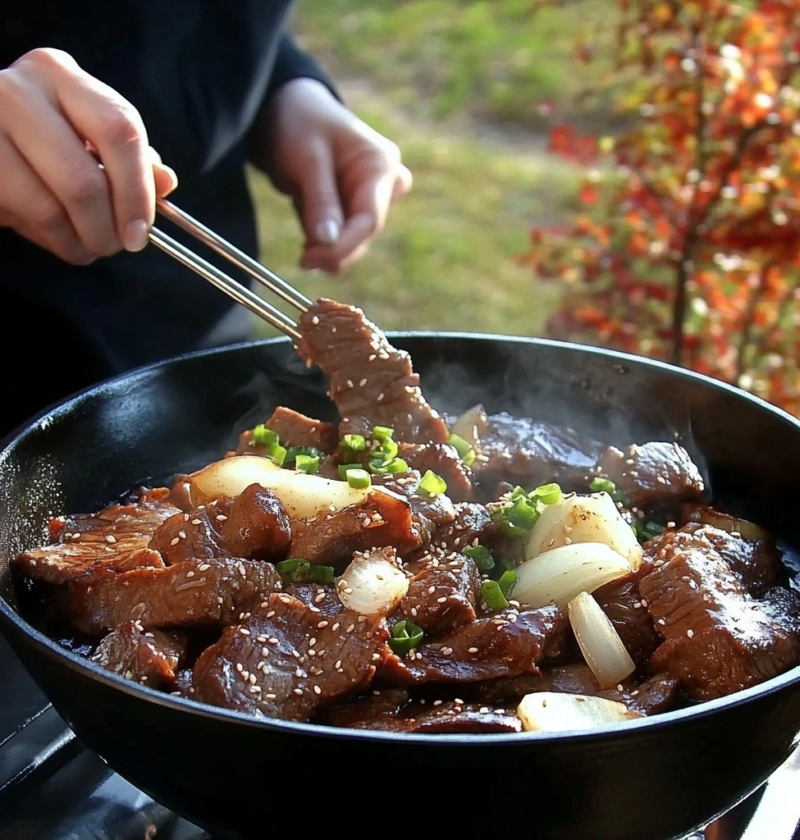
Korean BBQ beef bulgogi is a savory and sweet marinated steak dish that offers an authentic dining experience at home. This dish combines thinly sliced beef with a flavorful blend of Asian pear, soy sauce, garlic, and ginger to create a tender and delicious meal. The main appeal is the ease of preparation combined with the rich umami flavor and soft texture that defines authentic Korean cuisine. Cooking this dish brings a comforting yet vibrant energy to any family dinner table.
| Detail | Information |
|---|---|
| Prep Time | 20 minutes |
| Cook Time | 15 minutes |
| Total Time | 35 minutes plus marinating |
| Servings | 4 servings |
| Difficulty | Easy |
| Cuisine | Korean |
| Category | Main Dish |
| Method | Grilling or Searing |
Why This Recipe Works
This recipe works exceptionally well because it utilizes the natural enzymatic properties of Asian pear to naturally tenderize the beef without requiring mechanical pounding. The balance of salty soy sauce and sweet brown sugar creates a complex flavor profile that penetrates the meat during the marination process. I have found that this specific combination of ingredients ensures the beef remains juicy and succulent even after high-heat cooking.
The inclusion of fresh ginger and garlic introduces a bright aromatic note that cuts through the richness of the beef fat. This depth of flavor makes the dish a favorite among home cooks looking to recreate a restaurant-quality meal. The marination time allows the flavors to deeply infuse into the thin slices of meat, ensuring every bite is seasoned perfectly.
Furthermore, the cooking method is simple enough for a weeknight dinner but versatile enough for a weekend gathering. Whether you are using a grill pan indoors or an outdoor grill, the result is consistently excellent. The beef absorbs the moisture from the pear puree, preventing it from drying out during the quick sear required for bulgogi.
Chef Tips for Perfect Results
To achieve the best possible results, follow these specific tips regarding heat, marination, and preparation.
- Freeze the meat slightly: Partially freezing the beef tenderloin for thirty minutes makes it much easier to slice into thin uniform pieces.
- Use a sharp knife: Since the beef is sliced thin for bulgogi, a very sharp knife ensures clean cuts that do not tear the muscle fibers.
- Mix the marinade thoroughly: Whisk the pear, onion, garlic, and soy sauce mixture until the sugar has fully dissolved into the liquid base.
- Maximize marinating time: While thirty minutes is the minimum, marinating overnight allows the pear enzymes to break down the meat more effectively for extreme tenderness.
- Pat the meat dry: Before cooking, blot the meat with a paper towel to remove excess marinade for better browning on the grill surface.
- High heat searing: Cook the beef over medium-high heat to achieve a nice char while keeping the inside juicy and pink if preferred.
- Do not overcook: This dish cooks very fast, so watch it closely to prevent the beef from becoming tough and chewy inside.
- Rest the meat: Let the cooked beef rest for a few minutes before serving to allow the juices to redistribute throughout the meat layers.
Common Mistakes to Avoid
Even with simple ingredients, there are common pitfalls that can negatively impact the final texture and taste of your beef bulgogi.
| Mistake | Why It Happens | How to Fix It |
|---|---|---|
| Slicing beef too thick | Thick slices do not cook evenly and remain tough. | Slice the meat against the grain into thin strips. |
| Marinade contains lumps | Undissolved sugar or onion chunks create uneven flavor. | Puree the onions and pears or blend the marinade first. |
| Cooking over low heat | Low heat boils the meat rather than searing it. | Ensure your pan or grill is hot before adding the meat. |
| Crowding the pan | Overcrowding lowers the pan temperature and steams the meat. | Cook the beef in multiple batches to maintain high heat. |
| Over marinating for too long | Excess enzymes can make the meat mushy or mealy. | Limit marination to overnight or follow the twenty-four hour maximum. |
| Adding sesame oil early | Oil burns quickly at high temperatures and acquires a bitter taste. | Add the toasted sesame oil after the cooking process is finished. |
Variations and Substitutions
You can easily adapt this recipe to fit dietary preferences or what ingredients you have available in your pantry.
| Ingredient or Element | Substitution or Variation | Impact on Flavor or Texture |
|---|---|---|
| Soy Sauce | Use Tamari for a gluten-free option | Slightly different flavor depth but maintains saltiness. |
| Brown Sugar | Use honey or maple syrup | Changes the sweetness profile to be more floral or nutty. |
| Asian Pear | Use a ripe Bosc pear or Bosc | Retains similar enzymatic tenderizing properties and juice. |
| Beef Tenderloin | Substitute with Flank Steak | Requires different slicing direction for tenderness. |
| Sesame Oil | Omit for a lower fat version | Will lack the distinct nutty aroma in the final dish. |
| Rice Syrup | Use Corn Syrup as substitute | Provides similar stickiness and gloss without fermentation flavor. |
| Ssirajang | Serve with a side of Gochujang | Provides a spicy and savory dipping option for the beef. |
| Carrot Slices | Use Jicama sticks or Bell Peppers | Offers a different crunch and color to the presentation. |
Serving Suggestions and Pairings
Authentic Korean BBQ is best enjoyed as a shared meal with a variety of fresh accompaniments and side dishes.
- Serve warm short-grain rice to balance the savory and sweet flavors of the beef.
- Provide fresh lettuce or perilla leaves for wrapping the meat in a traditional lettuce wrap.
- Offer raw garlic slices and kimchi on the side for a spicy and spicy punch.
- Prepare cucumber slices seasoned with sesame oil and vinegar as a refreshing palate cleanser.
- Set out a platter of fresh bean sprouts that are lightly sautéed with sesame seeds.
- Include a bowl of cold millet beer or sparkling water to cut through the richness of the meat.
- Place small bowls of ssamjang or soy sauce with chili flakes for individual dipping.
- Consider adding grilled mushrooms alongside the beef for a meaty vegetarian option.
- Offer sweetened green tea or barley tea as a non-alcoholic digestive beverage.
- Pair with a simple radish salad to add crunch and acidity to the meal.
- Serve with steamed spinach dressed with sesame oil and garlic for a balanced side.
- Ensure you have enough napkins and wet towels for comfortable finger-licking dining.
A complete meal idea involves setting up a hot plate or grill pan in the center of the table so guests can cook their own portions of beef while enjoying conversation and the sizzling sounds of the cooking process.
Make Ahead Options
Yes, you can prepare the marinade and sliced beef up to twenty-four hours in advance to streamline your cooking process. Preparing the ingredients ahead allows the flavors to meld deeply, resulting in a more robust and integrated taste profile in the final dish. Store the marinating beef in an airtight container in the refrigerator to ensure food safety and prevent cross-contamination in the kitchen environment.
When you are ready to cook, simply remove the beef from the fridge and let it sit at room temperature for fifteen minutes to take the chill off. This step ensures even cooking when it hits the hot pan or grill. You can also prep the lettuce wraps and rice in advance so that the only task left on the day of cooking is the searing of the beef.
If you are planning a party, you can mix all the marinade ingredients up to three days ahead and label the container clearly. This saves valuable preparation time and reduces kitchen stress during the busy hours before a gathering. Just ensure you keep the mixture cold until you are ready to combine it with the meat.
Storage and Reheating
Proper storage is essential to maintain the quality and safety of the beef bulgogi if you have leftovers.
| Method | Duration | Instructions |
|---|---|---|
| Room Temperature | Up to 2 hours | Do not leave cooked food out longer than two hours to prevent bacterial growth. |
| Refrigerator | 3 to 4 days | Store in an airtight container and reheat thoroughly before eating. |
| Freezer | 2 to 3 months | Freeze the beef separately from the sauce to maintain best texture upon thawing. |
| Reheating | Stovetop or Microwave | Reheat quickly to warm without overcooking and drying out the meat. |
| Make Ahead | 24 hours | Marinate beef for best texture before cooking on the day of service. |
Nutritional Information
Approximate values are based on one serving and may vary depending on exact ingredients and portion size.
| Nutrient | Amount per Serving |
|---|---|
| Calories | 320 Calories |
| Protein | 32 Grams |
| Fat | 16 Grams |
| Saturated Fat | 6 Grams |
| Carbohydrates | 12 Grams |
| Fiber | 1 Gram |
| Sugar | 11 Grams |
| Sodium | 850 Milligrams |
Frequently Asked Questions
How do I get the best cut for this Korean BBQ beef dish?
You should choose a very lean and high-quality cut such as beef tenderloin or sirloin for the best texture. Avoid cuts with heavy marbling of fat if you prefer a lower fat meal, as leaner cuts cook faster and absorb the marinade better. Slicing the meat against the grain is crucial to ensure the beef remains tender after cooking.
Can I use this marinade for chicken or pork instead?
This marinade works excellently with chicken thighs or pork tenderloin to create a different variation of the same flavor profile. Just ensure that the meat is cooked to the appropriate safe internal temperature before serving. The enzymatic action of the pear will tenderize these proteins just as effectively as it does beef.
What should I do if the beef becomes tough after cooking?
If the beef is tough, it likely was overcooked or sliced too thickly for the marination to work fully. In the future, ensure you slice the meat as thinly as possible and cook it quickly over high heat to maintain moisture. Serving the meat immediately after cooking will also prevent it from sitting in a pan where residual heat continues to toughen the fibers.
Can I prepare this meal for a crowd for Korean BBQ events?
Yes, this recipe scales well for larger gatherings as the marinating process does not change regardless of quantity. You will simply need to adjust the cooking time by using multiple pans or a larger grill area to ensure even cooking. Setting up a buffet style with various dipping sauces enhances the experience for guests.
Is this recipe suitable for meal prep throughout the week?
While the beef cooks best fresh, you can cook the beef in batches at the start of the week for quick assembly during busy nights. Reheat the beef in a pan with a splash of water or broth to prevent it from drying out before serving. Ensure the rice and side dishes are prepped the night before to speed up the process.
How long can I store the leftover marinade for Korean BBQ beef?
You should discard any leftover marinade that has touched raw meat to prevent cross-contamination and food safety risks. Never reuse raw marinade for dipping or basting without boiling it thoroughly first, which is not recommended for raw juice. Always prepare a separate sauce for serving after the meat is fully cooked.
Conclusion
Preparing this homemade Korean BBQ at home brings a touch of authentic flavor and comfort to your family dinners with minimal effort. The beef tenderloin paired with the sweet and savory pear marinade ensures that every meal is a delightful experience. You will appreciate the tenderness and rich taste of this dish, which makes it a perfect choice for any occasion. Give this recipe a try to elevate your grilling game and enjoy a delicious meal.
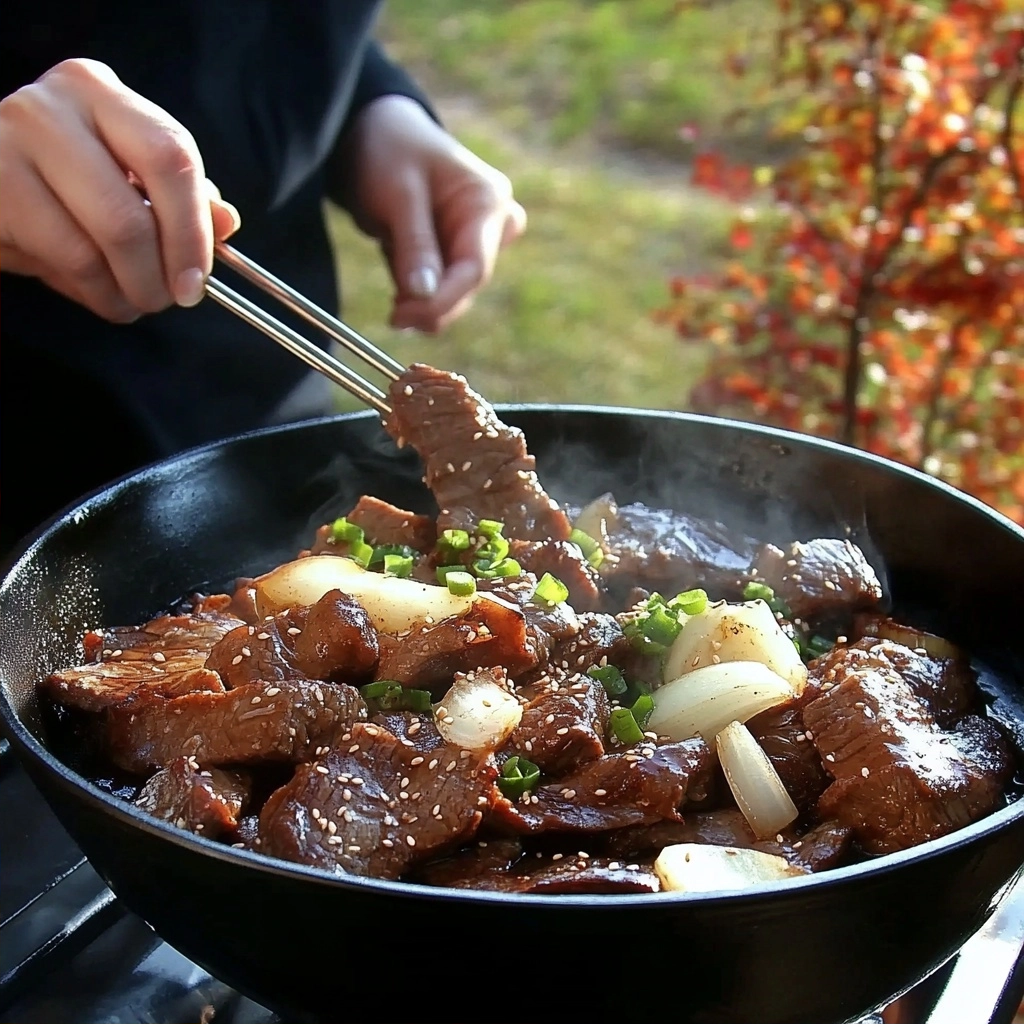
Korean BBQ Beef Bulgogi Recipe for Home Cooking
Ingredients
Method
- Pat the beef slices dry with paper towels.
- In a mixing bowl, combine soy sauce, brown sugar, garlic, ginger, sesame oil, rice vinegar, and black pepper into the pear puree. Mix well.
- Add the beef to the marinade and toss to coat evenly. Cover and refrigerate for at least 30 minutes, or up to 2 hours.
- Heat the cooking oil in a large skillet or grill pan over medium-high heat.
- Work in batches to avoid overcrowding. Cook the marinated beef for 1-2 minutes per side, or until caramelized and tender.
- Transfer the cooked bulgogi to a serving platter and garnish with toasted sesame seeds.
- Serve immediately as a main dish with steamed rice and kimchi, if desired.
Nutrition
Notes
Use a sharp knife to ensure clean cuts without tearing the meat.
If grilling outdoors, preheat the grill to high heat and cook similarly for 1-2 minutes per side without oil in the pan.
Leftover bulgogi can be stored in an airtight container in the refrigerator for up to 2 days.